On The Grade
Wathne Meets with FEMA Assistant Administrator
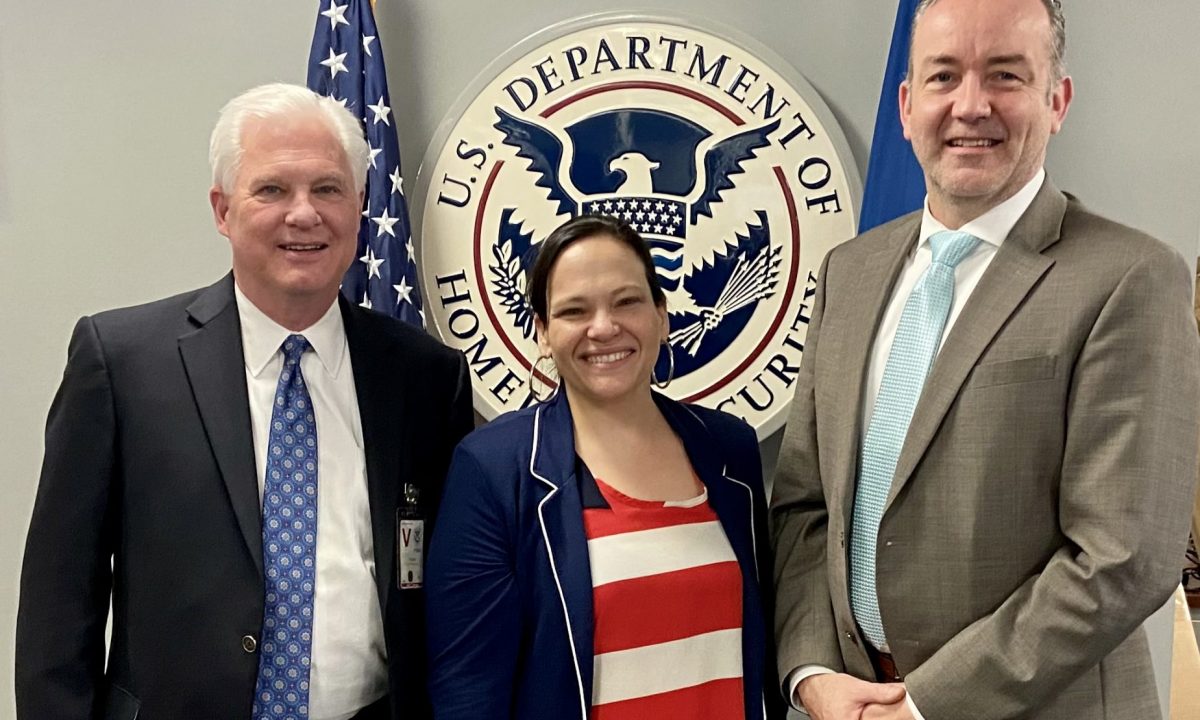
Last week, ACPA Executive Vice President Leif Wathne, P.E., met with the Federal Emergency Management Agency (FEMA) to discuss the disaster-resistant properties of concrete pavement. Assistant Administrator of the Grant Programs Directorate Pamela Williams emphasized the importance of building resilient communities. Wathne talked about improving our nation’s roadway system’s resilience and protecting the country’s evacuation routes with disaster-resilient concrete pavement. The meeting resulted in a productive dialogue, and ACPA will continue to promote concrete pavement’s role in building a resilient infrastructure system to FEMA.

Ferrebee Keeps Concrete Pavement Innovation Top of Mind at TRB
The Transportation Research Board’s Webinar ‘Designing and Constructing Concrete with Advancing Technologies’ featured ACPA’s Director of Technical Services Eric Ferrebee, P.E., presenting on Design Considerations for Connected and Autonomous Vehicles. In the webinar, Ferrebee broadened his scope to include considerations of sustainability, resilience, and PEM as well as some content related to ACPA’s Vision 2040 project. This webinar was part of a continuous series hosted by the TRB Standing Technical Committees on Design and Rehabilitation of Concrete Pavements and Concrete Pavement Construction and Rehabilitation, both of which Ferrebee serves on.
Wathne Returns to the Buckeye State to Continue to Promote Healthy Competition
ACPA Executive Vice President Leif Wathne, P.E., met with Ohio Concrete (the Ohio Chapter of ACPA), and representatives from local member companies to discuss next steps for their legislative affairs efforts on the issue of competition. Last year, Ohio Concrete helped introduce a competition amendment in the Ohio House budget bill, which Wathne testified in support of. MIT also submitted testimony in support of the amendment, and ACPA National staff completed an in-depth engineering analysis of the ODOT design process as part of this effort. The amendment garnered significant support but was pulled from consideration at the last moment. Efforts are underway to reinvigorate support for a healthy two pavement system in Ohio.